Ironing linen, jeans, bed sheets and other difficult fabrics
Linen holds its creases, denim fights back, sheets seem to go on for ever: these are the fabrics where a steam generator makes the difference. Fabric by fabric, here are the settings, the techniques and the mistakes to avoid.
Contents
Start with the care label
Care labels in the UK and Europe use a system of symbols managed by GINETEX. For ironing, the iron symbol is the one that matters:
| Symbol | Meaning | With a steam generator |
|---|---|---|
| Iron with one dot | Low temperature | Possible, inside out, moderate steam |
| Iron with two dots | Medium temperature | Yes |
| Iron with three dots | High temperature | Yes, plenty of steam and the boost |
| Crossed-out iron | Do not iron | No |
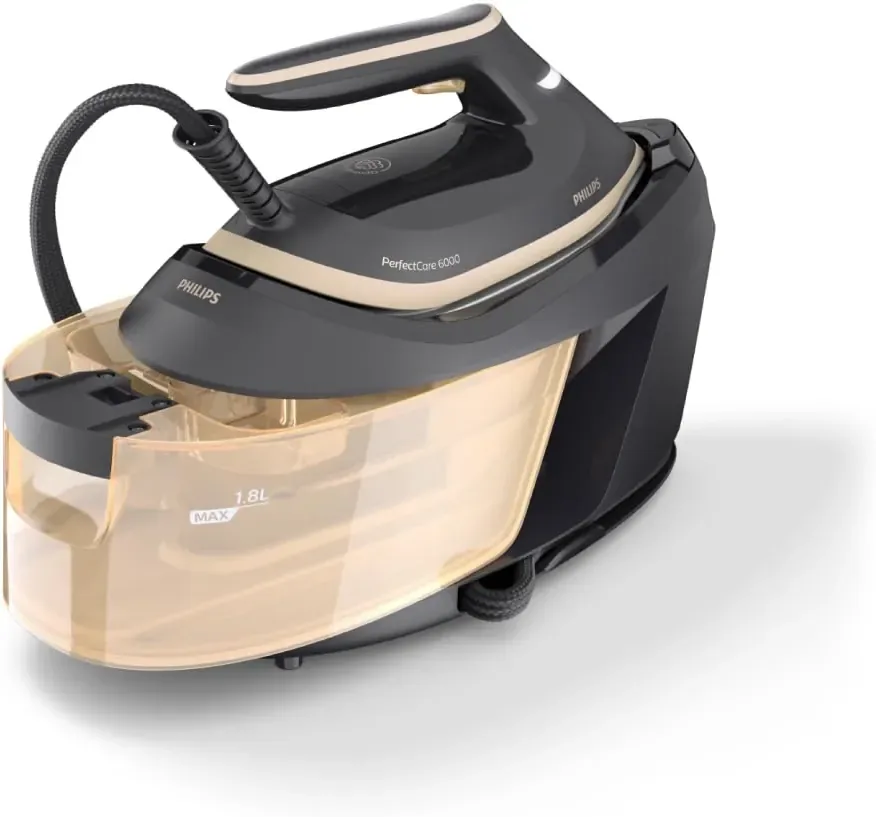
With a steam generator that has a thermostat, set the temperature according to the symbol. With a single-temperature steam generator such as the Philips PerfectCare 6000, Philips guarantees no burns on any ironable fabric: only the crossed-out iron is off limits. This guide complements our comparison steam generator or steam iron.
Why some fabrics resist
Cellulose fibres such as cotton, and linen above all, are held together by bonds that break and re-form with moisture and heat. When the fabric dries folded, those bonds re-form in the wrong position and lock the crease in. Linen, a long, stiff fibre with little stretch, is especially prone to this.
Thick, tightly woven fabrics such as denim or canvas also put up mechanical resistance: steam has to get through several layers of dense fibres before it reaches the middle. That is where the continuous steam output and boost of a steam generator make the difference. Large items such as sheets are not difficult as such, they are just long: high steam output and a big tank cut the time.
The fabric table
| Fabric | Steam | Right side or inside out | Dampness | Key technique |
|---|---|---|---|---|
| Linen | Maximum, boost | Inside out for dark colours | Very damp | Several passes, finish dry |
| Denim, canvas | Maximum, boost | Inside out | Slightly damp | Press on the thick seams |
| Cotton sheets | Generous | Right side | Slightly damp | Fold in half, then in quarters |
| Tablecloths | Generous | Inside out if embroidered | Damp | Work out from the centre |
| Wool | Moderate | Inside out | Dry | No pressure, steam from above |
| Silk | Moderate | Inside out | Dry | Quick strokes, test on a seam |
| Viscose | Moderate | Inside out | Slightly damp | Do not pull the fabric |
| Polyester | Moderate | Inside out | Dry | Quick strokes to avoid shine |
Linen
Linen is the fabric where a steam generator is most useful. The method:
- Iron it very damp, straight from the washing machine or misted with a spray bottle. Dry linen resists far more.
- Iron dark colours inside out to avoid shine; the right side is fine for pale linen.
- Use continuous steam with slow strokes, then the boost on stubborn creases.
- Finish with a pass without steam to dry the fabric and set the result.
- Hang it straight away, without folding.
Linen will crease again as you wear it: that is its nature and part of its charm. Linen ironed with a steam generator stays smart far longer than linen that has only been steamed. For linen shirts, see also our guide how to iron a shirt with a steam generator.
Jeans and canvas
Jeans do not always need ironing, but a pass with a steam generator gives them a neater look, especially around the waistband, pockets and knees.
- Turn the jeans inside out to avoid shine on dark denim.
- Start with the waistband and pockets, over the narrow end of the board.
- Lay each leg flat, seams lined up, and iron from top to bottom.
- Give the thick seams and knees a burst of steam boost.
- Turn them the right way out and hang by the waistband.
The same method works for canvas, heavy chinos and corduroy, taking care not to flatten the cord’s ribs: for corduroy, steam from above without pressing, inside out.
Sheets and duvet covers
Sheets are not difficult, they are big. A steam generator cuts the time considerably thanks to its steam output and tank.
- Fold the sheet in half lengthways, then in half again if your board is narrow.
- Iron the visible surface in long sweeps with continuous steam: it goes through several layers.
- Turn the bundle over and iron the other side.
- Unfold it once and iron any areas still creased.
- Fold it straight away along the pressed folds.
For a duvet cover, iron it inside out by sliding it around the board like a tube, then turn it the right way out. A fitted sheet hardly needs ironing: pull it taut when you hang it to dry and just steam the visible edges.
Tablecloths and napkins
A tablecloth in linen or heavy cotton is ironed damp, inside out if embroidered, working from the centre to the edges so you do not stretch the hem. Use the boost on storage creases. For a perfect result, put a chair next to the board so the finished part does not trail on the floor. Napkins are ironed flat first, then folded and pressed with the iron.
Wool
Wool dislikes pressure and too much heat. With a steam generator, release steam with the iron held a few millimetres above the fabric, without pressing, inside out. The steam relaxes the fibres and restores loft without flattening them. With a manual thermostat, use a pressing cloth. Dry flat if the jumper has lost its shape.
Silk, viscose and synthetics
These fabrics are most at risk from excess heat and shine.
- Silk: inside out, quick strokes, moderate steam, test first on an inside seam: some silks water-mark.
- Viscose: inside out, slightly damp, without pulling the fabric, which easily loses its shape when wet.
- Polyester and blends: inside out, quick strokes, little steam.
With a single-temperature steam generator such as the PerfectCare 6000, there is no thermostat to set: Philips guarantees no burns on ironable fabrics. Ironing inside out is still good practice to avoid shine.
Blended fabrics
Many garments combine several fibres: cotton and polyester, linen and viscose, wool and polyamide. The rule: work to the most delicate fibre. A linen-viscose blend is ironed like viscose, inside out and without pulling; cotton with elastane is ironed without too much heat or pressure. The iron symbol on the care label already takes the blend into account: it is the most reliable guide.
Useful accessories
- A water spray bottle to dampen dry linen and cotton.
- A pressing cloth, a thin piece of cotton, for wool and dark fabrics with a manual thermostat.
- A sleeve board, a small board for sleeves.
- A thick towel to iron embroidery inside out without flattening it.
- A breathable board cover that lets steam through.
Mistakes to avoid
- Ironing linen dry: it resists and you end up making pass after pass.
- Ironing jeans on the right side: dark denim goes shiny.
- Flattening wool and corduroy: the fibres get marked.
- Spreading a whole sheet over the board: it trails on the floor and creases again.
- Overusing the boost on thin fabrics: they stay damp.
- Ignoring the crossed-out iron: some materials melt or distort.
For the appliance, our reference model is the Philips PerfectCare 6000: 150 g/min of continuous steam and a boost of up to 600 g according to Philips, enough to deal with linen and denim.
One last tip: save the difficult fabrics for the end of the session. The steam generator will be fully hot, the tank still well filled, and you will not have to break off a run of shirts for a sheet or a tablecloth. Linen and denim also benefit from being slightly damp: take them out of the washing machine last, just before you set up at the board.
Smart trousers and a sharp crease
Suit trousers or chinos are ironed in two stages: the top, then the legs with their crease. A steam generator helps you press a sharp, lasting crease.
- Turn the pockets out and iron them flat, then tuck them back in.
- Slip the waistband over the narrow end of the board and iron it as you turn, with continuous steam.
- Lay one leg on top of the other, lining up the inside and outside seams: the crease forms naturally at the front and back.
- Fold the top leg up out of the way and iron the inside of the bottom leg.
- Fold the leg back down and iron the outside, pressing along the crease.
- Use the boost on the crease, then a pass without steam to set it.
- Turn the trousers over and repeat for the other leg, then hang them by the hems on a clip hanger.
For dark wool or blended fabrics, use a pressing cloth if your appliance has a manual thermostat, or iron inside out to avoid shine.
Dresses and skirts
A dress is ironed from top to bottom: straps or shoulders, bodice, waist, then the skirt, turning it around the board. Pleated skirts take patience: hold each pleat with flat clips if needed, iron in the direction of the pleats and let it cool before moving the fabric. For frills and gathers, the tip of the soleplate and vertical steaming often do better than ironing flat.
Dampening dry laundry properly
Linen and heavy cotton iron much better damp. If the laundry has dried, there are three methods:
- The spray bottle: mist evenly, roll the item up and leave it for a few minutes so the moisture spreads.
- The sealed bag: put several misted items in a clean bag for half an hour before the session.
- The steam generator’s steam: a first pass with lots of steam, without pressing, dampens the fabric before the smoothing pass.
Avoid leaving damp laundry in a heap for hours: it can start to smell musty.
The order for a mixed-fabric session
When the basket contains every kind of fabric, the order matters less with a single-temperature steam generator than with a thermostat, but it is still useful:
- Delicate items, inside out: silk, viscose, synthetics.
- Shirts and cotton tops.
- Trousers and skirts.
- Heavy items: denim, canvas, linen.
- Large items: sheets, duvet covers, tablecloths.
With a manual thermostat, this order saves waiting for the soleplate to cool down. With a single temperature, it lets you save the quick strokes for the end, once you are warmed up, and finish with the items that need the most steam.
Curtains and voiles
Curtains often come out better hanging than flat. After washing, rehang them while still slightly damp: their weight does part of the job. For any remaining creases, hold the steam generator’s iron a few centimetres away and steam from top to bottom without touching the fabric. Synthetic voiles respond very well; heavy linen or velvet curtains take longer. Protect the floor and nearby walls from condensation and check the label, especially for technical or blackout fabrics.
Towels and bath linen
Terry towels are not ironed: pressure would flatten the loops and reduce their absorbency. A good shake before drying is enough. Linen or cotton tea towels, on the other hand, are ironed like a small tablecloth, damp and flat, which makes them nicer to use and easier to store. A steam generator does each one in a few seconds at the end of the session.
T-shirts and cotton jersey
T-shirts, polo shirts and cotton jersey do not behave like a woven fabric: the knit stretches easily and does not spring back well if you pull it while ironing. Iron them inside out, especially if they have a print or vinyl transfer, which must never touch the soleplate. Slide the T-shirt over the board like a tube and iron with short strokes and moderate steam, without stretching the hem or neckline. On polo shirts, a knitted collar flattens better with steam from above than with pressure. Often vertical steaming on the hanger is enough: quick, with no risk of stretching the knit. Let the garment cool on the hanger before folding it.
School uniforms and workwear
School uniforms are a weekly fixture in many UK households, and they combine several of the fabrics above. Polycotton shirts and blouses iron quickly with moderate steam, inside out if they start to shine. Polyester trousers and skirts need quick strokes and a pressing cloth or inside-out ironing to avoid shiny patches, especially on the seat and knees. Pleated skirts are worked pleat by pleat, as described above. Knitted jumpers and cardigans usually just need steam from above, with no pressure.
Workwear follows the same logic. Cotton drill and heavy polycotton respond well to the boost, much like canvas. For garments with embroidered logos or printed badges, iron around them or inside out on a thick towel. Hi-vis items and garments with reflective strips should be checked carefully against the care label, as reflective tape can be damaged by heat.
With these pointers, fabrics with a reputation for being difficult simply become fabrics that need a little more steam and a little more method. That is exactly where a high-output steam generator such as the PerfectCare 6000 earns its place over a standard iron.
Frequently asked questions
How do you iron linen so it does not stay creased?
Iron it very damp, with maximum steam and the boost on stubborn creases, then finish with a pass without steam. Hang it straight away.
Do you need to iron jeans?
It is not essential. A pass inside out with a steam generator gives them a neater look, especially at the waistband and pockets.
How do you iron sheets quickly?
Folded in half then in quarters, with long sweeps of continuous steam, then unfolded once for the remaining areas.
Can you iron wool with a steam generator?
Yes, inside out, releasing steam without pressing. Use a pressing cloth if your steam generator has a manual thermostat.
How do you avoid shiny marks?
Iron dark fabrics, denim, synthetics and silk inside out.
Crisp laundry, in less time.
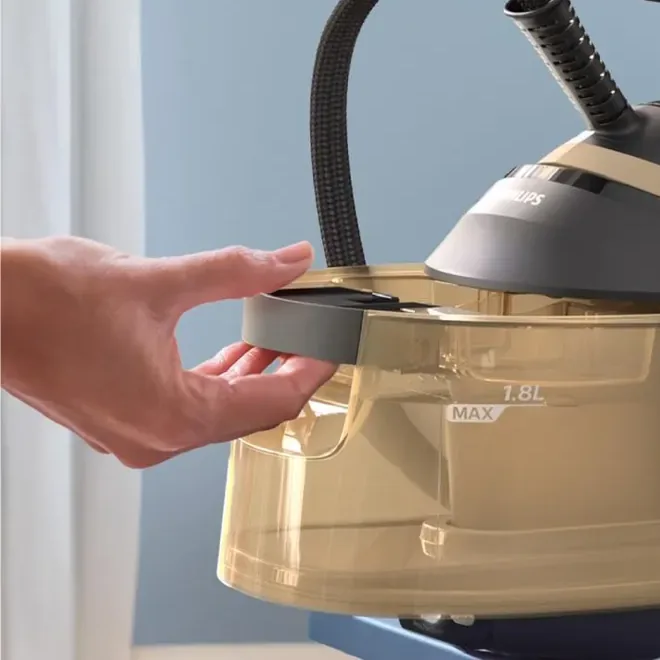
8 bar · 150 g/min · 600 g steam boost · 2400 W · 1.8 L tank. The price changes often on Amazon: check it, along with the seller, the PSG6064/80 model number, the UK plug and the returns policy, before you order.
Check the price on AmazonAffiliate link · new tab