How to use a steam generator iron, step by step
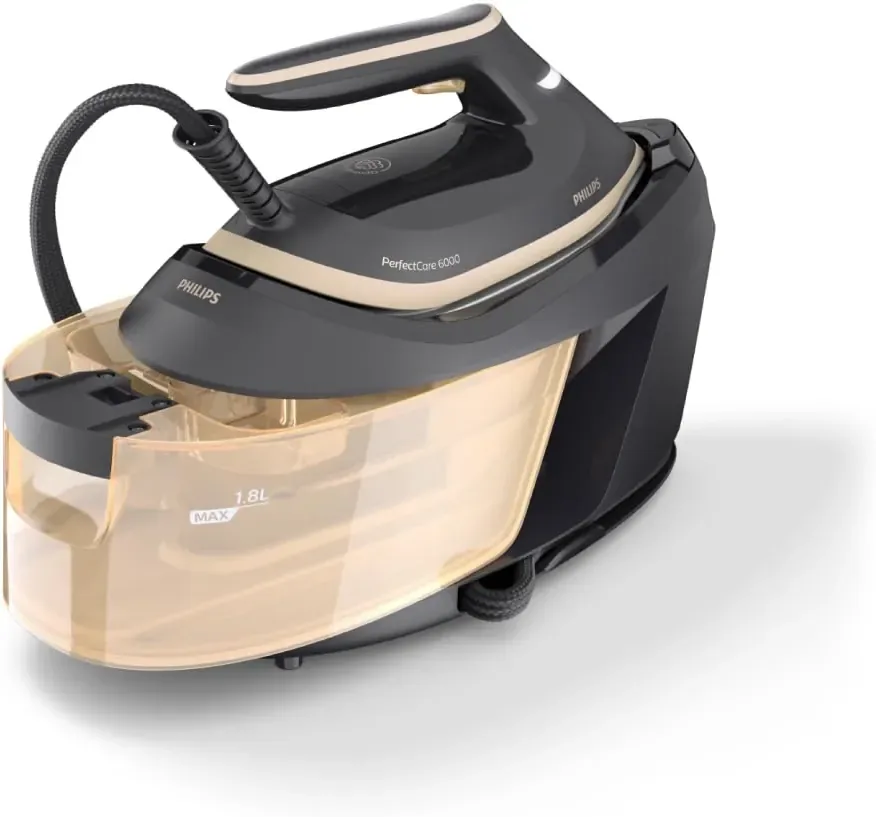
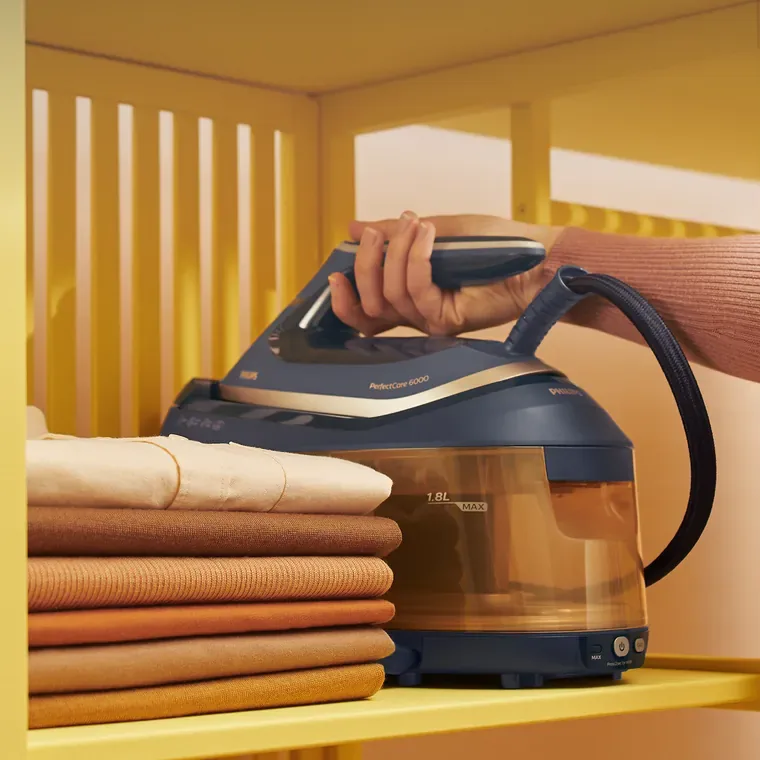
Set up, fill, iron, put away: the complete method for crisp results with a steam generator iron, illustrated with the Philips PerfectCare 6000. Your own appliance’s manual always comes first.
Contents
Before first use
Remove all packaging and stickers from the base, the iron and the soleplate. Read the manufacturer’s manual: it tells you which water suits your hardness level, the safety instructions and the descaling procedure for your model. This guide covers the steps common to steam generators; where there is a difference, your appliance’s manual takes priority.
The first time, run the steam for a few moments over a sink or an old cloth. You may notice a slight new-appliance smell: it soon goes.
Find out how hard your water is, too. Your water supplier publishes it, usually searchable by postcode on its website, in mg/l of calcium carbonate or in Clark degrees. It determines which water to use and how often to descale.
Setting up your ironing station
- The board should be at hip height: too low and it strains your back; too high and it strains your shoulders.
- The base sits on the board’s iron rest if it is wide and stable enough; otherwise on a sturdy table alongside.
- The hose runs over the board on the side opposite your free hand, without dragging on the laundry.
- The cord should not cross a walkway or hang where a child could pull it.
- A hanger and a rail within reach let you hang each item as soon as it is done.
Filling the tank
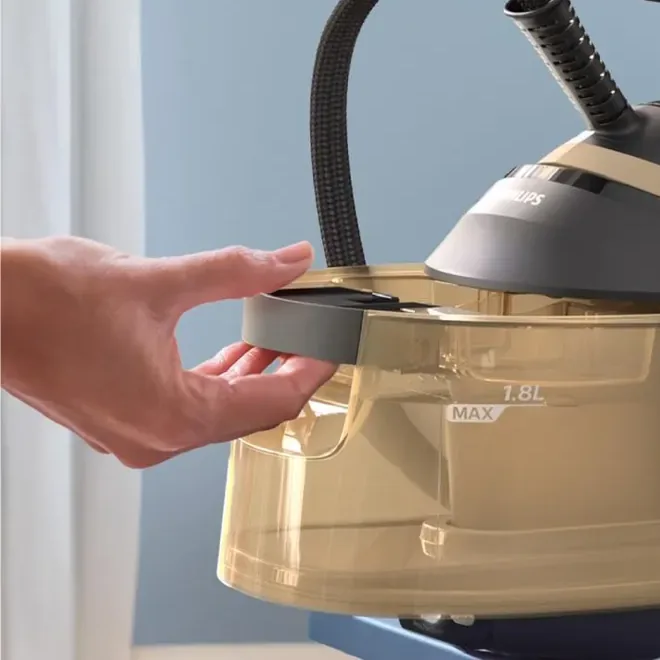
- Remove the tank. On the PerfectCare 6000, it slides out from the front of the base.
- Fill it at the tap up to the max line, with the water recommended in the manual. Philips states that the PerfectCare 6000 can use tap water.
- Put it back until it clicks.
- Top up whenever you like during the session: Philips says the tank can be refilled while in use.
Never pour into the tank: perfume, tumble dryer water, rainwater, starch, vinegar or any descaler not specified in the manual. These liquids can damage the appliance, cause spitting or stain your laundry.
Heating up
Plug in the appliance and press the on button. On the PerfectCare 6000, heating up takes about 2 minutes; a light and a beep tell you it is ready. Use the time to sort your laundry.
Before touching the fabric, release a first shot of steam into the air over a cloth. That way, any water that has condensed in the hose comes out somewhere other than on your clothes. Do the same after a long break.
The right technique
Lay the garment flat on the board with no creases underneath. Press the trigger a moment before you start moving: the steam takes a second to arrive. Move the iron in long, even strokes without pressing hard, and keep the steam on while you move.
Speed matters more than force. Too fast and the steam has no time to penetrate; too slow on a thin fabric and it stays damp. On a stubborn crease, use the steam boost with a firmer press or the dedicated function on your model, then go over it once without steam to dry and set it.
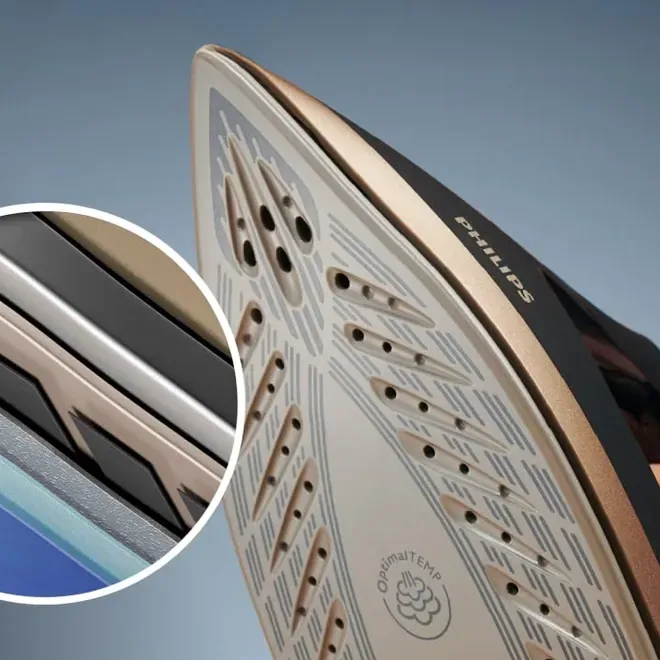
With OptimalTEMP there is no thermostat to set: the same temperature suits all ironable fabrics according to Philips. So you can move from one item to the next without waiting.
What order to iron in
Starting with the small areas stops you creasing what you have just smoothed. Here is the order we recommend for everyday items.
| Item | Recommended order |
|---|---|
| Shirt | Collar, cuffs, sleeves, yoke, fronts, back |
| Trousers | Waistband and pockets, then legs laid one on top of the other, crease pressed in |
| Dress | Straps or shoulders, bodice, then skirt, turning as you go |
| Bed sheet | Folded in half and then in four, in large sections |
| Jeans | Inside out: pockets, waistband, then legs |
Our guide on how to iron a shirt with a steam generator covers every step for a crisp collar and a flawless button placket.
Adapting to the fabric
- Cotton: plenty of steam, fabric slightly damp if possible.
- Linen: maximum steam and the boost, ironed damp, inside out for dark colours.
- Denim, canvas: inside out, steam boost on thick areas.
- Wool: moderate steam, no pressure, inside out.
- Silk, viscose, synthetics: inside out, quick strokes, test first on an inside seam.
Always check the care label: a crossed-out iron means the garment must not be ironed. Our article on ironing linen, jeans and bed sheets covers the tricky fabrics.
Vertical steaming
Hang the garment or curtain, pull the bottom of the fabric taut with your free hand while keeping it out of the jet, hold the iron a few centimetres away and steam from top to bottom. Do not touch the fabric with the soleplate and never steam clothes while someone is wearing them. Philips states that the PerfectCare 6000 can be used for vertical steaming.
After ironing: empty, cool, put away
- Switch off and unplug the appliance.
- Let the iron cool on its rest, with the soleplate protected.
- Empty the tank if you will not be ironing in the next few days.
- Lock the iron onto the base with the carry lock.
- Store the hose in its compartment and secure the cord.
- Put the steam generator away flat, somewhere dry.
Common problems and fixes
| Problem | Likely cause | Fix |
|---|---|---|
| Drops of water on the laundry | Condensation in the hose, not fully heated | Wait for the signal, first shot of steam into the air |
| Little or no steam | Tank empty or not seated properly, limescale | Fill, reseat, descale according to the manual |
| White or brown marks | Limescale particles | Run the descaling, then test on a cloth |
| Shiny marks on dark fabric | Ironed on the right side | Iron inside out |
| Laundry still damp | Strokes too slow, too much steam | Speed up, finish with a pass without steam |
| Descaling light on | Descaling is due | Run the procedure with the Calc Clean container |
If a problem persists, contact the manufacturer’s or the seller’s customer service. Do not take the appliance apart yourself.
Safety
- Steam comes out at a high temperature: never point it at a person or an animal.
- Keep the appliance, cord and hose out of children’s reach.
- Always stand the iron on its rest during breaks.
- Unplug before descaling, before cleaning and after every session.
- Do not use an appliance with a damaged cord or hose.
- Never immerse the base or the iron in water.
Frequently asked questions
Do I need to wait for it to cool before filling it?
Not on the PerfectCare 6000: Philips says the tank can be filled at any time, even while ironing. On models with a pressurised boiler you do need to wait for it to cool; follow your manual.
Why are there drops at the start of a session?
Water that has condensed in the hose comes out on the first press. Wait until heating has finished and release a shot of steam into the air before touching the laundry.
Should I iron laundry damp?
Cotton and linen are easier to iron when slightly damp. For other fabrics, it is not necessary with a steam generator.
Can I leave water in the tank?
For a few days, yes. For longer, empty it: standing water encourages deposits and smells.
Crisp laundry, in less time.
8 bar · 150 g/min · 600 g steam boost · 2400 W · 1.8 L tank. The price changes often on Amazon: check it, along with the seller, the PSG6064/80 model number, the UK plug and the returns policy, before you order.
Check the price on AmazonAffiliate link · new tab